
Minimal Cork: sustainable homeware
Modern, innovative and stylish products designed with all the benefits of cork. Made in Portugal.



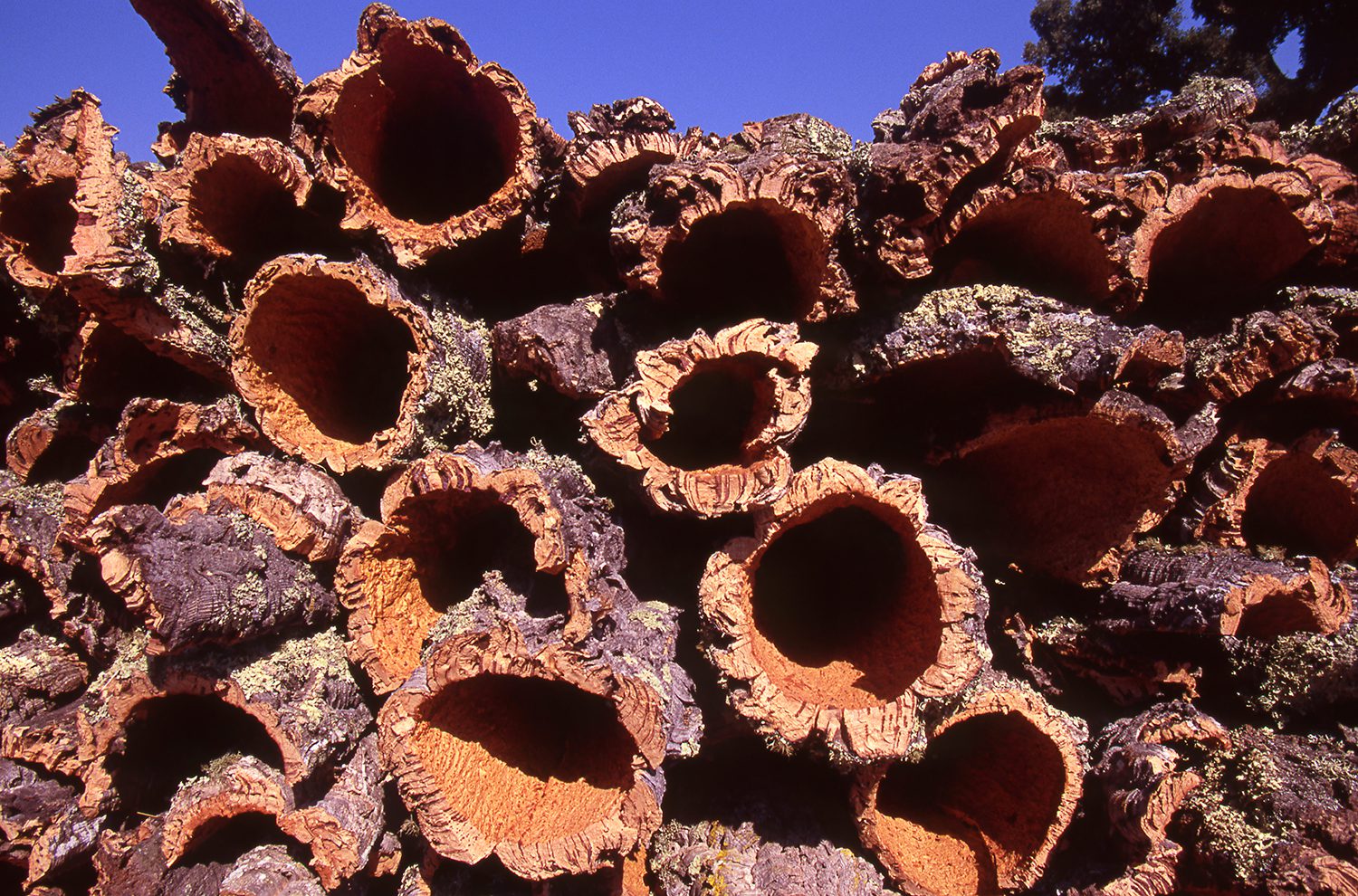
Cork harvesting
Cortiça – Quercus Suber – is the bark of the cork oak. It is removed from the tree by ‘stripping’ or prising the bark with axes.
Carried out every 9 years, a cork tree can live for 150 years.
Once removed from the tree the cork bark is stacked in the open air for around 6 months before it’s put to use. Cork not used for wine stoppers is broken down to a granular form and used to manufacture a range of goods from design products by Minimal Cork to Amorim cork flooring – you can see the range by clicking here. Cork is even used in the nose of NASA space rockets – read all about it by clicking here!
The harvesting of cork is a highly skilled and labour intensive process handed down between generations.
The cork industry is a backbone to Portugal’s rural way of life, supporting some 9,000 direct jobs and at least 6,500 indirect jobs.
The local cork industry and agroforestry system encourages people to settle in local communities and thus halts the depopulation of these communities. Livestock, beekeeping and the production of aromatic and medicinal plants and mushrooms all benefit from the sustainability of cork.
Read more at Cork Blimey!
Hygienic and hypoallergenic
Cork is formed of a unique cellular structure that doesn’t absorb dust. It it hygienic and helps protect against allergies.
Resistant to impact or friction
Cork is made of a honeycomb structure making it resistant to impact or friction. Comfortable to walk on, it is an ideal material for cork flooring, as it relieves strain on feet, joints, and back.
Very light material
Over 50% of cork is air, which at 0.16 grams per cubic centimetre makes cork is a very light material. This is perfect when product design requires strength and lightness, such as a cork tray by Minimal Cork.
Good acoustic properties
Corks’ natural properties achieve a 53% reduction in sound, so it is the ideal choice for cork flooring in properties with noisy neighbours.
Thermal comfort and potential energy savings
One contributing factor to the sustainability of cork is the retention of heat due to its low thermal conductivity value. This is a key factor where thermal comfort is a critical element of design, such as cork flooring. Not only is this great for the planet, it’s great for the consumer too, as cork flooring achieves an optimal floor temperature all year round, reducing energy consumption and cost.
Moisture resistant and impermeable to liquids and gases
Cork is formed of gaseous components enclosing small moisture resistant compartments formed of suberin and ceroids. This means cork is practically impermeable to liquids and gases enabling it to age without deteriorating. Unlike timber that will warp under contact with water, cork can simply be rinsed under a tap of warm water.
Shock absorbing and bounces back from impacts
With a natural memory, cork bounces back from impacts. It is the only solid which, when compressed on one side, does not increase in volume on the other side. As a result of its elasticity, cork adapts to variations in temperature and pressure without suffering alterations.
Wear resistant
Cork is durable and wear resistant, so it’s an ideal material for a range of applications including homeware and product design by Minimal Cork.
Fire retardant
A natural fire retardant, cork burns without a flame and does not emit toxic gases during combustion.
 Cork
Cork
 Twitter
 Pinterest


